Understanding Remote Browser Isolation
What is Remote Browser Isolation?
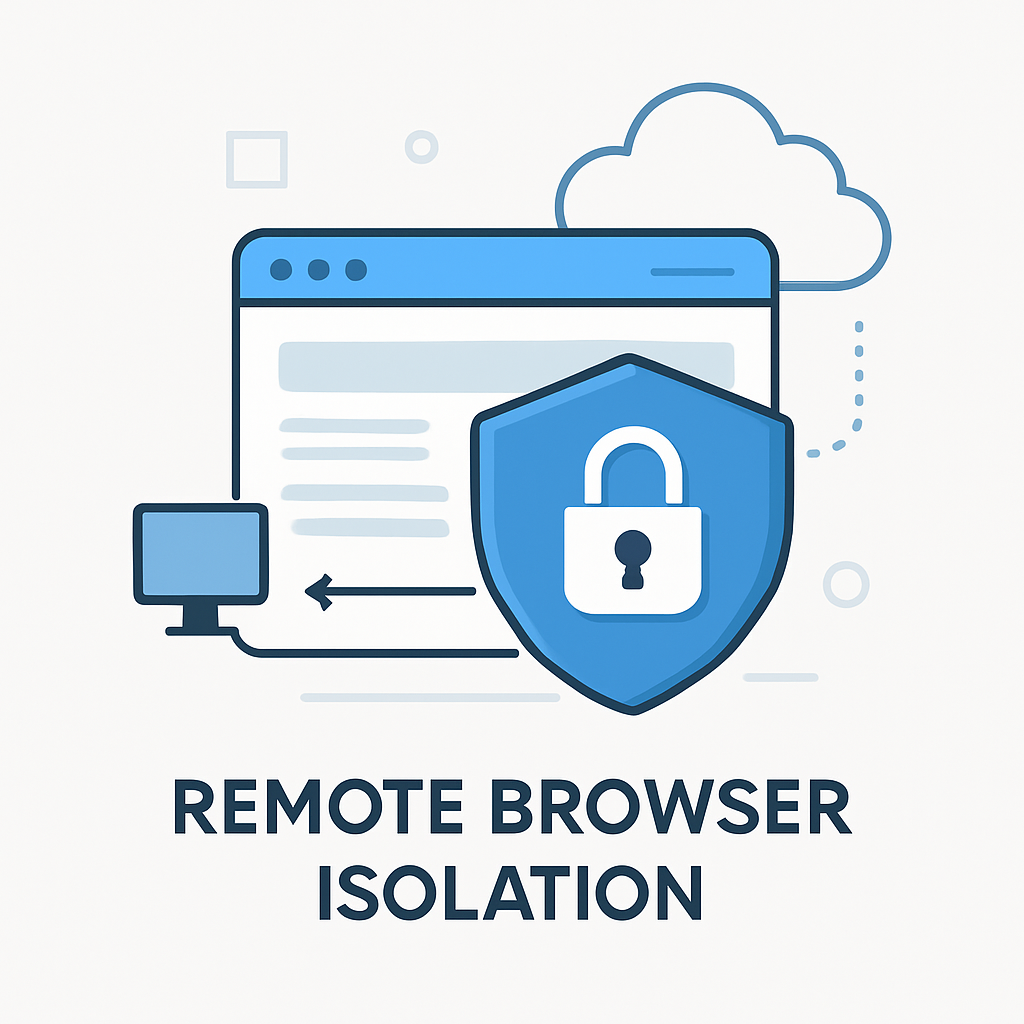
Remote Browser Isolation (RBI) is a cutting-edge cybersecurity technology that fundamentally changes how organizations protect themselves from web-based threats. Instead of allowing users to browse the internet directly on their devices, RBI executes all web browsing sessions in isolated, cloud-based environments.
This approach creates a secure barrier between users and potentially malicious web content, ensuring that even if a website contains malware, ransomware, or zero-day exploits, these threats never reach the user's endpoint device or corporate network.
"Remote Browser Isolation represents a paradigm shift from detection-based security to prevention-based security. Instead of trying to identify threats, we simply assume all web content is untrusted and isolate it completely."
How It Works
The RBI process is transparent to users but provides robust protection behind the scenes:
Step-by-Step Process:
- User Request: When a user clicks a link or enters a URL, the request is intercepted and routed to the RBI service.
- Remote Execution: The web page loads and executes in a disposable, isolated browser container running in the cloud.
- Visual Streaming: Only the visual representation (pixels) of the webpage is streamed back to the user's device via secure protocol.
- User Interaction: Mouse clicks, keyboard input, and scrolling are sent to the remote browser and executed there.
- Session Termination: When the session ends, the container is destroyed, eliminating all trace of the browsing activity and any potential threats.
Key Benefits
Zero Trust Security
Assumes all web content is potentially malicious and treats it accordingly. No trust, always verify.
Malware Protection
Prevents malware, ransomware, and zero-day exploits from reaching endpoints, regardless of sophistication.
Data Loss Prevention
Blocks unauthorized data exfiltration and prevents sensitive information from leaving your network.
Compliance Ready
Helps meet regulatory requirements like GDPR, HIPAA, PCI-DSS, and SOC 2 with built-in security controls.
Seamless Experience
Transparent protection that maintains user productivity without noticeable performance impact.
Reduced Attack Surface
Eliminates the endpoint as an attack vector for web-based threats, drastically reducing risk exposure.
Use Cases
RBI is particularly valuable for organizations in high-security and compliance-sensitive industries:
Industry Applications:
- Financial Institutions: Protect customer financial data and prevent fraud while enabling employees to research market information online.
- Healthcare Organizations: Safeguard patient health records (PHI) while allowing medical staff to access research and external resources.
- Government Agencies: Enable secure web access for employees handling classified or sensitive information.
- Legal Firms: Protect confidential client information while researching case law and accessing court documents.
- Manufacturing & Industrial: Secure access to supplier portals and industry resources without risking intellectual property theft.
- Education: Provide safe internet access for students and faculty while protecting institutional data.
- Remote & Hybrid Workers: Enable secure browsing from any device, anywhere, without VPN complexity.
Technical Architecture
Understanding the technical components of RBI helps appreciate its robustness:
Core Components:
- Isolated Browser Containers: Disposable, ephemeral environments that execute web content in complete isolation.
- Secure Streaming Protocol: Encrypted transmission of visual information from remote browser to user device.
- Policy Engine: Controls access, content filtering, and data transfer permissions based on organizational policies.
- Session Management: Handles user authentication, session lifecycle, and resource allocation.
- CDN Integration: Delivers low-latency streaming through globally distributed edge locations.
- Analytics & Logging: Provides visibility into browsing activities, threats blocked, and user behavior.
Security Layers:
RBI provides defense-in-depth through multiple security layers:
- Network isolation (separate VPC/subnet)
- Container isolation (separate kernel namespaces)
- Process isolation (sandboxed browser execution)
- Data isolation (no persistent storage)
- Protocol isolation (one-way visual streaming)
Implementation Considerations
When deploying RBI, organizations should consider:
Planning Factors:
- Deployment Model: Cloud-based (SaaS) vs. on-premises vs. hybrid architecture
- User Experience: Balance between security and performance requirements
- Integration: SSO, identity providers, existing security stack, DLP tools
- Network Requirements: Bandwidth, latency, QoS considerations
- Policy Configuration: URL filtering, content categories, file handling rules
- Scalability: Concurrent user capacity and geographic distribution
- Monitoring: Logging, reporting, and security analytics requirements
The Future of Web Security
As cyber threats continue to evolve in sophistication and frequency, Remote Browser Isolation represents a fundamental paradigm shift in how organizations approach web security. Traditional security models that rely on detecting and blocking threats are increasingly inadequate against zero-day exploits, advanced persistent threats (APTs), and polymorphic malware.
RBI moves from a detection-based model to a prevention-based model. By isolating potential threats in a remote environment, organizations can:
- Eliminate the need to identify every possible threat signature
- Protect against unknown and future threats
- Reduce security team workload and alert fatigue
- Enable safer employee productivity and research
- Achieve true zero-trust architecture for web access
Organizations implementing RBI can significantly reduce their risk exposure while maintaining productivity and user experience. This technology is rapidly becoming an essential component of modern cybersecurity strategies, particularly for:
- Zero Trust Network Access (ZTNA) implementations
- Secure Access Service Edge (SASE) architectures
- Cloud security posture management
- Remote workforce enablement
- Third-party risk management
"The question is no longer if you'll implement browser isolation, but when. The threat landscape demands this level of protection."
Ready to Secure Your Organization?
Experience the power of Remote Browser Isolation with RemoteBrowser. Protect your endpoints, enable your workforce, and achieve true zero-trust security.

RemoteBrowser Team
Security experts passionate about making the web safer for everyone.
 All system normal